
能動態と中動態:バンヴェニスト『一般言語学の諸問題』より
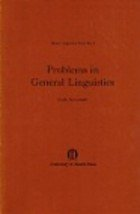
”Active and Middle Voice in the Verb” in Benveniste, Emile. (1971). Problems in general linguistics. Coral Gables, Fla.,: University of Miami Press.
動詞は主語とのみ関係 目的語にはかかわらない
What characterizes the Indo-European verb in its own right is that it has reference only to the subject, not to the object. (pg.146)
中動態の従来の定義
the parasmaipada ‘a word for another'(: active), and the atmanepada ‘a word for oneself’ (middle). (pg.146)
Sanskrit yajati ‘he is sacrificing'(for another as a priest) and yajate ‘he is sacrificing’ (for himself, as the one making the offering) (pg.146)
中動態にふさわしい定義
動詞(能動態のみ) 動詞(中動態のみ)のケース
能動態のみの動詞: 動詞の示す動きが、主語の外部で達成する過程を示す。
In the active, the verbs denote a process that is accomplished outside the subject (pg. 148)
中動態のみの動詞:動詞の示す動きが、主語を中心にして起こる過程であり、主語はその過程の内部にある。
the verb indicates a process centering in the subject, the subject being inside the process. (pg. 148)
注意:動作と状態の区別ではない
not at all to make the difference between the active and the middle coincide with that of verbs of action and verbs of condition. (pg. 148)
動詞(中動態のみ)のケース
印欧語の例:ある、進む、流れる、喜ぶ は中動態。 目的語を取るかどうかは無関係
“to be” is a process, ”to go” or ” to flow,” in which the participation of the subject is not required (pg. 148)
Here the subject is the seat of the process, even if this process, as is the case for Latin. fruor[to delight in] or Sans. ,manyate, demands an object; the subject is the center as well as the agent of the process:
印欧語の例:生まれる、眠る、~という状態である、想像する、成長する
the subject is the center as well as the agent of the process: he achieves something which is being achieved in him—being born, sleeping, lying [helpless or dead], imagining, growing, (pg. 149)
中動態から派生する能動態
中動態だが、過程が主語の外部に位置づけられてしまう
Gr. xoimatai , “he sleeps”[動詞の形は中動態(3人称単数)で「彼は寝ついている」だが、意味は能動態「彼は寝ている」のようなケース]
a change in the relationship of the subject to the process so that the subject, in becoming exterior to the process, will become the agent of it, and the process, no longer taking place within the subject, will be transferred to another term that will become the object of it. (pg. 149)
Transitivity is a necessary product of this conversion from middle to active. (pg. 149)
他動詞・使役動詞:過程を主語の外部に位置づけ、主語が過程の座を占めない。過程は目的語をとって、主語の目標とする。目的語を主語の目標とする
starting from the middle, actives are formed that are called transitives, or causatives, or factitives, (pg. 149)
the subject, placed outside the process, governs it thenceforth as agent, and that the process, instead of having the subject for its seat, must take an object as its goal (pg. 149)
定義の要約
-
中動態は[単独にではなく]能動態との対比において定義づけられる。
-
<中動態―能動態>では、動詞の表す過程に主語が内在化しているか外在化しているかという主語と過程との関係において位置づけ、主語がどういう質の行為者であるかを示している。
-
能動態であれば、過程は[主語から出発して]主語の外で完遂する過程をあらわす。
-
能動態に対立する中動態では、動詞は主語がその中心となるような過程を表している。つまり主語は過程の内部にある。
-
能動態は、ある行為の成果であり、主語は過程の外部に位置していることを更にはっきりと明示する。ところが中動態は、過程の内部に位置づけられることを明示する。
-
主語が行為者として過程に影響を及ぼしているだけであれば能動態。これに対して、主語が行為者として過程に影響を及ぼしながらも影響を受けているのであれば中動態となる。
The principle of a properly linguistic distinction, turning on the relationship between subject and process, is brought out quite clearly by this comparison. In the active, the verbs denote a process that is accomplished outside the subject. In the middle, which is the diathesis to be defined by the opposition, the verb indicates a process centering in the subject, the subject being inside the process. (pg. 148)
It is really an active, the production of an act, revealing still more clearly the exterior position of the subject in relation to the process; and the middle will serve to define the subject as interior to the process (pg. 149)
[The middle-active opposition] situating positions of the subject with respect to the process, according to whether it is exterior or interior to it, and to qualifying it [=the subject] as agent, depending on whether it[=the subject] effects [the process], in the active, or whether it effects while being affected, in the middle. (pg. 149-150)
注意(1):倫理与格は考慮不要:extralinguistic notion of the “interest” of the subject in the process (pg. 150)
注意(2):法・時制は主語が過程の内部・外部に関係なく決まる:the modal and temporal variations belonging to the stem affect the very representation of the process, independently of the situation of the subject (pg. 150)
注意(3):再帰:主語が過程の影響を受けながらも、必ずしも主語自身を客体として受け入れない the reflexive that signal processes physically affecting the subject without the subject always taking itself for the object (pg. 151)[再帰に関してこれだけしか述べていない]